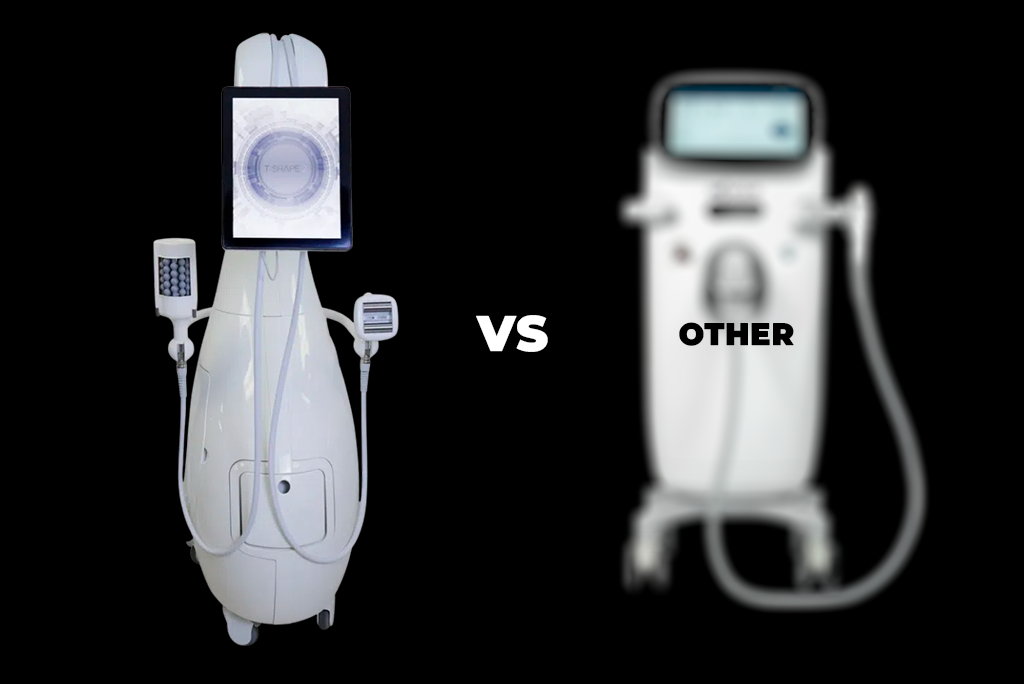
Body contouring equipment is one of the more crowded categories in medical aesthetics, and most comparison pages online focus on brand names rather than what actually determines whether a device fits your practice. Instead of a device-by-device breakdown, here’s the framework worth using — and how T-Shape 2 holds up against it.
Single concern vs. combined protocol
The first question to ask about any body contouring machine is whether it treats one concern or several. Some devices are built specifically for muscle stimulation, others for skin tightening, and others for cellulite — which means a practice sometimes ends up owning two or three separate machines to cover what patients are actually asking for. T-Shape 2 was built to address muscle tone, skin laxity, and cellulite within a single protocol, which is worth weighing against the cost and footprint of running multiple single-purpose devices.
Treatment time and patient throughput
Session length has a direct impact on how many patients a provider can see per day, which affects the return on the equipment investment. When comparing machines, ask vendors directly how long a typical session runs and how that compares to their competitors — not just what the marketing page claims, but what their existing customers report in practice.
Evidence behind the results
Any device claiming to improve muscle tone, skin laxity, or cellulite should be able to point to a specific protocol length and measurable outcome — not just a general claim of “visible results.” When evaluating options, ask for the treatment count tied to any stated result (for example, a percentage improvement “after X treatments”), since that’s what actually lets you set expectations with patients.
Training, support, and provider learning curve
A device is only as good as the team administering it. Some systems require extensive training and ongoing certification, while others are designed to be picked up quickly by existing aesthetic providers. Ask how many training hours are included, whether refresher training is available, and what support looks like if a provider has questions six months after their initial training — not just at launch.
Consumables and ongoing cost
Some body contouring devices carry per-treatment consumable costs — gels, tips, or disposable applicators — that add up over a year of regular use and change the real cost of ownership beyond the upfront price. This is worth asking about directly, since it’s often left out of initial pricing conversations.
Where T-Shape 2 fits
Within this framework, T-Shape 2’s positioning is built around combining multiple results in one system rather than requiring separate devices, with a defined 10-treatment protocol tied to specific outcomes for muscle tone, skin laxity, and cellulite. For a practice weighing several options, the honest comparison isn’t which brand name is more recognizable — it’s which device best matches the concerns your current patients are actually asking about, and which vendor gives you the clearest answers to the questions above.
If you’re actively comparing options, review the full T-Shape 2 details or reach out to our team with your specific comparison questions — we’re happy to walk through how it stacks up against what else you’re considering.