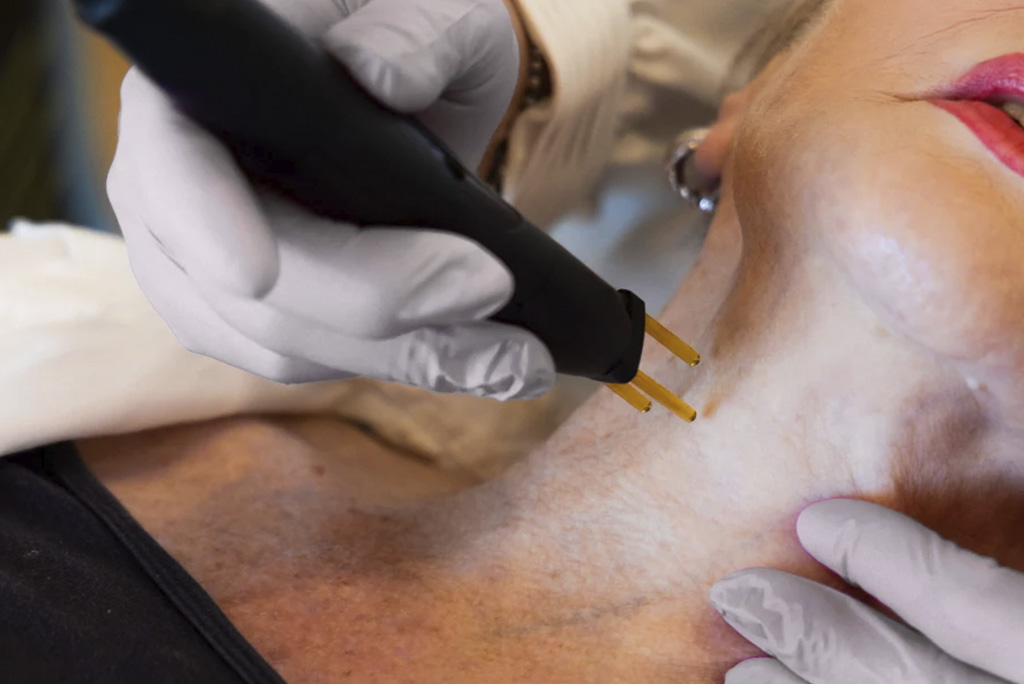
If you’ve come across the name “Neogen” while researching skin treatments and aren’t quite sure what it actually is, you’re not alone — it’s one of the more commonly searched, least clearly explained treatments in aesthetics. Here’s a straightforward answer, without the marketing language.
What is Neogen?
Neogen is a device that performs Plasma Skin Regeneration (PSR) — a treatment that uses ionized nitrogen gas, rather than light or radiofrequency, to deliver controlled thermal energy into the skin. The goal is to stimulate the skin’s own collagen and elastin production in the deeper dermal layer, which over time improves firmness, texture, and overall skin density.
What does a Neogen treatment actually involve?
During treatment, the device passes controlled bursts of plasma energy across the skin. Patients typically feel warmth during the session, and some redness afterward is normal, similar to a moderate sunburn. Because the treatment is designed to work with the skin’s surface rather than remove it, downtime is generally shorter than fully ablative resurfacing options. Visible improvement tends to build gradually, with many patients noticing meaningful change around the three-month mark as new collagen matures.
Is nitrogen plasma the same as a laser?
No — this is one of the most common points of confusion. Lasers use focused light energy, while nitrogen plasma devices like Neogen use ionized gas to transfer heat directly into the tissue. The practical difference is in how the energy interacts with skin: plasma technology can deliver deep thermal effect while leaving more of the surface layer intact, which is part of why recovery tends to be more comfortable than some laser-based alternatives.
What is Neogen PSR, specifically?
“PSR” is simply the acronym for Plasma Skin Regeneration — the category of treatment Neogen performs. It’s not a separate product; it’s the name for the mechanism itself, describing what the plasma energy is doing at the cellular level (stimulating tissue regeneration rather than just resurfacing the surface).
Who is a good candidate for Neogen?
Neogen is validated for a broad range of skin types (I–IV), which makes it accessible to a wider group of patients than some resurfacing technologies that carry more risk for medium-to-darker skin tones. It’s commonly used for firmness, texture, and general signs of aging, and has also become a common recommendation for patients dealing with facial volume loss following rapid weight change, since it supports the skin’s ability to tighten around new facial contours.
How is this different from other treatments already on my provider’s menu?
Most practices don’t offer Neogen instead of other treatments — they offer it alongside them. Because it specifically targets deeper dermal structure, it’s frequently recommended for patients who’ve already tried lighter resurfacing or topical treatments and are looking for a more substantial, longer-lasting improvement without committing to surgery. It’s also commonly paired with body-focused systems like T-Shape 2 for practices building a full-body rejuvenation offering.
What should I ask my provider before starting treatment?
If you’re considering Neogen, it’s reasonable to ask what skin type range the device is validated for, how many sessions are typically recommended, what the expected timeline for visible results looks like, and what downtime to expect based on your specific skin and treatment area. A provider who can answer these clearly — rather than only speaking in general terms about “regeneration” — is a good sign they understand the treatment well.
Where to learn more
If you’re a patient, ask your provider whether Neogen is a fit for your specific concerns. If you’re a practice evaluating whether to add it to your treatment menu, you can review full specifications on the Neogen page, or contact our team with any questions about protocol, training, or pricing.