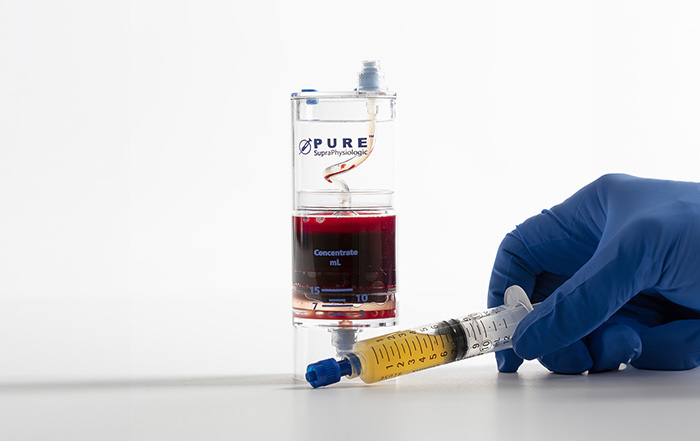
Most practices already understand standard PRP. Fewer can clearly explain the next step up in the category: systems that add a plasma protein concentrating stage, often described as “A2M” kits. Because “protein concentrator” is one of the terms practices search for most often when comparing PRP options, here is a plain-language guide to what it means, how it differs from a standard PRP workflow, and what to ask any supplier before adding one to your menu.
A quick refresher: what standard PRP does
Standard PRP (platelet-rich plasma) starts with a blood draw from the patient. A centrifuge separates the sample so the platelets can be concentrated in a small volume of plasma, which is then used in the treatment. Systems such as PurePRP Two (double spin) and AbsolutePRP Gold (single spin) are built around that platelet-focused workflow.
What does a “protein concentrator” add?
Blood plasma carries far more than platelets. It also contains a wide range of proteins, and a protein concentrating system adds a processing stage designed to concentrate some of those plasma proteins into a smaller volume. In other words, standard PRP is focused on the platelet fraction, while a protein concentrator extends the process to include proteins from the plasma itself. The PurePRP with Protein Concentrator is an example of a system built around this extra step.
What is A2M?
A2M stands for alpha-2-macroglobulin, one of the large proteins naturally present in blood plasma. It is the protein that kits in this category are named after, and it is the main reason the term appears in so many searches. Interest in A2M has grown mostly through conversations in regenerative and orthopedic medicine, and the research landscape continues to develop. For that reason, practices should treat A2M systems as an evolving area and be careful to describe them accurately to patients rather than relying on broad promises.
Standard PRP vs. PRP with a protein concentrator
Focus: Standard PRP concentrates platelets. A protein concentrating system adds a step aimed at plasma proteins as well.
Workflow: The extra stage generally means more preparation steps and more time per patient, so it is worth asking exactly how the process runs in a real treatment room.
Positioning: Many practices offer standard PRP as their core option and add a protein concentrating system as a more advanced option for the patients and protocols that call for it.
Economics: Advanced systems usually carry a higher per-kit cost, so pricing, treatment fees, and patient demand all need to line up before you commit.
Where it fits in a practice’s treatment menu
For aesthetics-focused practices, PRP is most often paired with microneedling, such as a protocol built around Dermapen 4, and with at-home products that keep patients engaged between visits. A protein concentrating system doesn’t replace that foundation; it gives practices that already run strong PRP programs another option to offer, and it can help them stand out from competitors who only offer a single, standard system.
Questions to ask before choosing a system
What data supports it? Ask for platelet recovery and concentration figures, and for any information the manufacturer can share about the protein concentrating stage.
What claims can I make? Ask how the system is classified and what you can appropriately say to patients, so your marketing and consent forms stay accurate and compliant.
How long does each patient take? Processing time affects your daily schedule and the economics of each treatment.
What is the true per-treatment cost? Compare kit price, draw volume, and any additional consumables, not just the headline price.
What training and support are included? A multi-step workflow is easier to run consistently with clear protocols and available support.
How to explain it to patients without overpromising
Keep the language simple and honest: PRP is prepared from the patient’s own blood, and a protein concentrating system adds an extra processing step. Avoid guaranteeing specific outcomes, explain that results vary from person to person, and let the treating provider decide which option suits each patient’s goals.
Where to go next
You can explore the full A2M and protein concentrator collection and our complete PRP collection, or contact our team to compare systems and talk through which one fits your practice, your patients, and your treatment room.