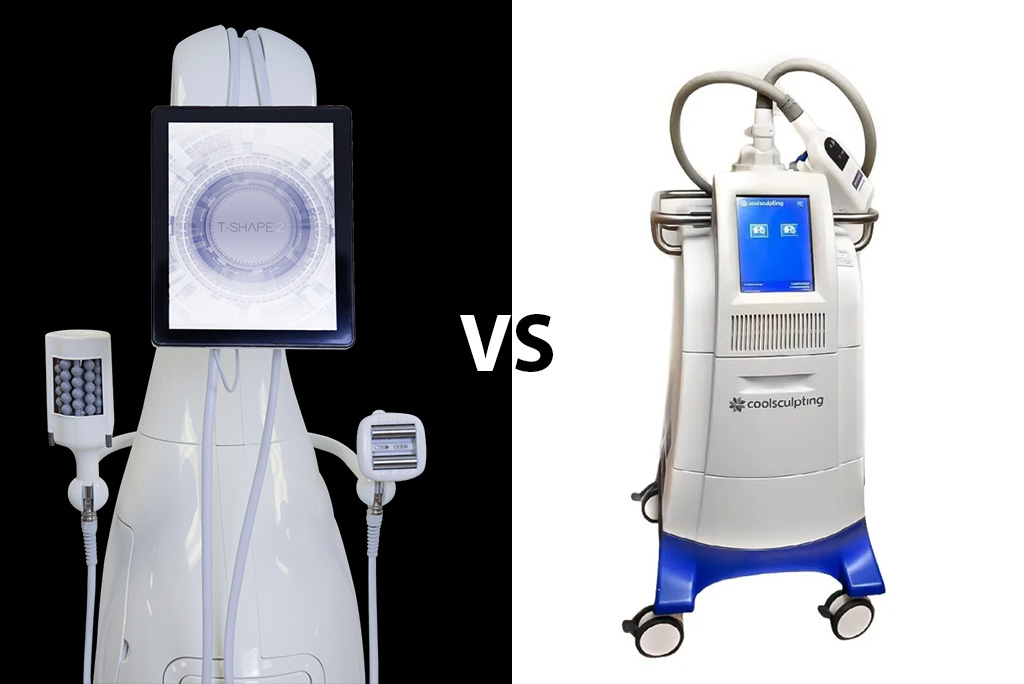
CoolSculpting is one of the most recognized names in body contouring, so it’s a natural comparison point for anyone researching T-Shape 2. The two treatments aren’t actually built to solve the same problem, though, and understanding that difference matters more than picking a “winner.”
What CoolSculpting is designed to do
CoolSculpting uses cryolipolysis — a controlled cooling process that targets and reduces fat cells in specific areas. It’s a well-established, FDA-cleared approach specifically for localized fat reduction, typically used on areas like the abdomen, flanks, or thighs where a patient has a stubborn pocket of fat that hasn’t responded to diet and exercise. Results develop over several weeks to months as the body naturally processes the treated fat cells.
What T-Shape 2 is designed to do
T-Shape 2 isn’t a fat-reduction treatment in the same sense — it’s built to address muscle tone, skin laxity, and cellulite within a single protocol. Rather than eliminating fat cells, it’s aimed at improving the muscle-to-fat ratio, tightening the skin, and smoothing the appearance of cellulite over a course of treatments (data behind the device points to a 23% improvement in muscle-to-fat ratio and a 10% improvement in skin tone and laxity after 10 sessions, along with visible cellulite improvement in the majority of patients treated).
The real difference: what problem each one solves
This is the part that gets lost in “vs.” comparisons: CoolSculpting is a fat-volume treatment, and T-Shape 2 is a tone-and-texture treatment. A patient asking “how do I get rid of this specific fat pocket” is asking a CoolSculpting-shaped question. A patient asking “how do I look more toned and tighter” or “can anything help with this cellulite” is asking a T-Shape 2-shaped question. They’re not interchangeable answers to the same problem — they’re answers to two different problems that often show up in the same patient.
Can they be used together?
Many practices treat these as complementary rather than competing options. A patient who has already reduced localized fat volume through a treatment like CoolSculpting often still has questions about skin tightness and muscle tone in that same area afterward — which is exactly the gap T-Shape 2 is built to address. Whether combining treatments makes sense for a specific patient is a conversation for their provider, based on their goals and treatment history, but the two technologies are not solving for the same outcome.
What this means for cellulite specifically
Neither cryolipolysis nor most fat-reduction technologies are built to meaningfully address cellulite, since cellulite is a structural and textural skin issue rather than a fat-volume issue. This is one of the clearer differentiators for T-Shape 2: cellulite improvement is one of its three core, measured outcomes, alongside muscle tone and skin laxity, tracked over a 10-treatment protocol.
Questions worth asking before choosing either treatment
Regardless of which technology you’re considering, it’s worth asking what specific outcome the treatment is designed to measure (fat volume, muscle tone, skin tightness, or cellulite), how many sessions are involved, and what timeline to expect for visible results. Comparing based on the actual outcome you want — rather than on brand recognition alone — leads to a much better match between patient and treatment. Practices building a broader rejuvenation menu often pair T-Shape 2 with skin-quality treatments like Neogen to address both body and facial concerns.
Learn more
If you’re a patient trying to decide which treatment fits your goals, talk to your provider about what specific concern you’re hoping to address. If you’re a practice comparing body contouring technology to add to your menu, you can review full T-Shape 2 specifications, or contact our team to talk through how it could complement what you already offer.