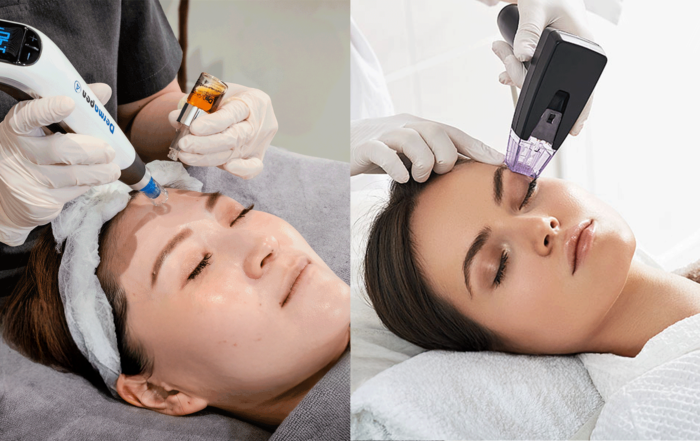
Microneedling is one of the most crowded equipment categories in aesthetics, and most “versus” pages online compare brand names instead of the things that actually affect your day-to-day results and margins. Rather than a device-by-device spec battle, here’s a framework you can use to evaluate any pen — and how Dermapen 4 holds up against it.
Needle depth control and versatility
The first thing to check is how much control the device gives you over needle depth. A pen that only works well at one or two settings forces you to compromise between concerns: the depth that suits fine lines and product absorption is very different from the depth used for acne scarring or stretch marks. Dermapen 4 is built around adjustable depth, which lets a single device cover facial rejuvenation, texture, scarring, and body areas without needing a second handpiece for each concern.
Needle sleeves, hygiene, and per-treatment cost
Almost every professional microneedling system relies on disposable needle cartridges or sleeves, and this is where the real cost of ownership hides. When comparing devices, ask for the price per sleeve, how many treatments each one covers, and whether the cartridges are proprietary (locked to one vendor) or widely available. A lower device price can easily be erased by higher per-treatment consumable costs over a year of regular use. Disposable sleeves also simplify hygiene in a busy treatment room, so confirm exactly which components are single-use and which need sterilizing between patients.
Treatment speed and patient comfort
Session length drives how many patients a provider can see per day, and comfort drives whether patients come back for the rest of their series. Ask vendors how a typical full-face session runs in practice, how much topical anesthetic is usually needed, and what patients commonly report about discomfort. Microneedling protocols depend on patients completing a multi-session course, so a device that patients tolerate well is worth more than one that looks better on a spec sheet.
What the device does alongside serums and PRP
Many practices don’t offer microneedling as a stand-alone service. It’s frequently combined with hydrating serums, exosome products, or PRP to build a more complete regenerative protocol. When evaluating a pen, think about how easily it fits into those combination treatments, since protocols that bundle several steps tend to carry higher ticket values and stronger patient retention than single-step visits.
Training, support, and learning curve
A device is only as good as the team using it. Ask how many training hours are included, whether refresher training is available, and what support looks like six months after launch. Microneedling has a relatively gentle learning curve compared to energy-based devices, but technique still matters for consistent results, so clear protocols and accessible support make a real difference.
Where Dermapen 4 fits
Within this framework, Dermapen 4’s strengths are its adjustable depth, disposable sleeves, and the breadth of concerns one pen can address — face and body, texture, scarring, and product absorption. For a practice weighing several options, the useful comparison isn’t which brand is more recognizable; it’s which device matches the concerns your current patients ask about, with consumable costs and training you can plan around. Many practices also add a take-home step such as MG-HA35 to support recovery between sessions and increase retail revenue.
Getting a clear answer for your practice
If you’re comparing options, review the full Dermapen 4 specifications, browse the rest of our microneedling collection, or contact our team with your specific comparison questions. We’re happy to walk through pricing, sleeve costs, and training for your practice.